• Take The Next Step Toward A Better Smile With Porcelain Veneers

    It's impossible to look through any celebrity weekly while waiting in line at the grocery store and not see page after page of flawless smiles. Do they have it from birth? Sometimes, heredity just so happens to give someone that kind of smile, but veneers, not genes, are often to blame. These are how your smile can be enhanced with porcelain veneers. The porcelain veneers before and after photos assist you in determining whether or not the vanners are right for you.


    Porcelain Veneers: What Are They?

    Dental veneers are thin porcelain pieces precisely made to match the color and size of your original teeth. They adhere to natural teeth using a unique substance to ensure they are the right size, shape, and color. Patients may decide to obtain veneers for a variety of reasons, such as:


    • Gray, yellow, or discolored teeth
    • Teeth with a pronounced unevenness or irregular form
    • Broken teeth
    • Teeth that have sustained damage from grinding
    • Spaces between teeth


    You must see the local dentists near me if you notice these symptoms.


    Ways in which Vendors might make you Smile youthfully

    Restoring the Size and Shape of Teeth: Age, regular use, and accidents can cause teeth to chip or wear down, altering the appearance of your smile. Veneers improve teeth's appearance and provide a balanced smile by adjusting the natural size and shape of the teeth.


    Enhancing Your Smile: Discolored or stained teeth can give you an older, more self-conscious formation. Whiter teeth can give you a more childish, echoing appearance, increasing your confidence and making you seem younger. Your chosen white veneer shade will provide you with a naturally bright smile.


    Closing Gaps and Correcting Alignment: Missing teeth and crooked teeth can provide the appearance of years on your smile. By resulting in a straight, gap-free, and smooth grin, veneers resolve these problems. You can look and feel younger with a more balanced grin, which boosts your self-esteem and motivates you to smile more frequently.


    Increasing Self-Confidence: You're far more inclined to smile and interact with people with a better smile. You can look younger and more personable by smiling and projecting more confidence. Veneers care for common dental issues, giving you the smile you've always desired and improving your overall look.


    Rejuvenating Your Gum Line: Gum recession can age you by giving the impression that your teeth are more prolonged. A pleasing gum line can provide you with self-assurance and a renewed smile.


    Getting Dental Veneers: A Process

    Speaking with your dentist

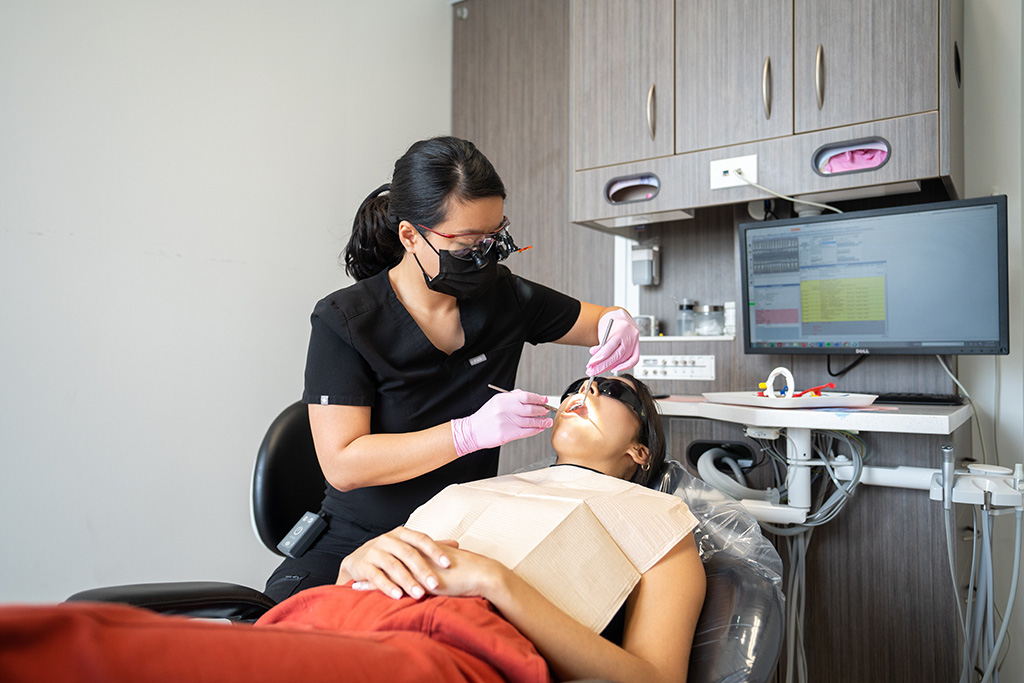
    To receive dental veneers, you must make a dental appointment near me for a consultation with your dentist. During this session, your dentist will examine your teeth to see if you are a good candidate for veneers, and you will talk about your goals for the operation.


    Using imprints to create personalized veneers

    Your dentist will organize your teeth and then carry impressions to ensure the veneers are produced to order and fit precisely. The imprints are forwarded to a dental laboratory, where experts utilize them as a model to craft a custom set of veneers made of porcelain or composite resin.


    The Veneers' Adhesion to Your Teeth

    It's time to get the personalized veneers placed on your teeth once ready. Each veneer will be expertly positioned on top of each tooth's front surface by your dentist after each tooth has been properly cleaned and polished and a unique bonding agent has been applied.


    Ultimately, from the first consultation to the completion of the final treatment stage, getting dental veneers can take several weeks, but the work is well worth it.


    Teeth in preparation for veneer implantation

    Your dentist will need to organize your teeth to place the veneers. For every tooth with a veneer, a small portion of enamel must be removed during this procedure.


    Finalizing the issue


    Dental veneers are a favored option if you want to improve the appearance of your smile and feel more confident. While receiving dental veneers carries specific possible hazards, these are frequently overshadowed by their many advantages. Veneers can significantly enhance oral health and look and last many years with the proper care and upkeep. So why not start down the path to having the smile of your dreams? See your porcelain veneers near me dentist right now!


  • How Are Dental Sealants Different From Fillings?

    Dental operations must be combined with a few at-home routines to ensure optimal oral health. Dental sealants and fillings are the most often utilized materials in dental operations. Because these dentistry terminology are used in operations that take less than 30 minutes, they can be misleading. They both also appear to coat and shield the teeth. Dental filling and sealants are different, though. There are several differences between sealants and fillings, including their permanence, composition, and intended use.


    Dental Filling

    Dental fillings are something that most people have heard of or are at least vaguely familiar with. A dental filling is utilized to repair a tooth that has been injured by tooth decay. These days, most dentists employ composite fillings due to their natural coloring, direct bonding with tooth enamel, and reduced adverse response rates. Your child's dentist will fill the remaining cavity with softened composite resin and cure it one layer at a time with a special curing light once the rotten tissue has been removed.


    Dental sealants

    When sealing the tooth, a somewhat different method is used. Dental sealants are similarly made of composite resin but are administered differently. This "seals" the tooth, preventing the enamel from being harmed by microorganisms that cause decay. Your child's teeth will need to be cleaned to get rid of bacteria from the feeling of their teeth before dental sealants are applied. This is to prevent these objects from becoming lodged beneath the sealant. 


    Here's a quick overview of the differences between dental fillings and sealants. 

    Objectives

    The dentist will advise dental fillings and sealants to accomplish a specific goal. Dental sealants are prophylactic treatments intended to shield your molars from dental deterioration. Dental fillings, on the other hand, are restorative procedures meant to repair the harm caused by tooth decay. The decay is thoroughly cleaned before the dental filling is inserted to protect against possibly dangerous microorganisms and additional harm.


    Materials

    Various materials are frequently used to make dental fillings. Dental professionals and patients often have to choose between composite resin, porcelain, silver amalgam, or gold fillings. Depending on the patient's preferences and the location of the filled tooth, tooth colored fillings material like porcelain or composite resin is frequently chosen. In contrast, dental sealants are placed on your teeth in a liquid state and are composed of plastic. However, they soon solidify when exposed to a specific type of UV radiation.


    Durability

    The patient's oral hygiene habits impact how long dental sealants and fillings last. Both dental operations can last for the anticipated time if good oral hygiene practices are maintained. The sealant will deteriorate with time and require replacement. On the other hand, fillings are more long-lasting and can endure for many years, provided that the tooth's remaining structure is shielded from dental disease.


    Concluding the matter

    Usually, your tooth's condition is considered while deciding between a filling and a dental sealant. Take a dentist appointment near me; they can assist in assessing the degree of damage to your teeth and help you select the most appropriate course of action. Even though experiencing dental decay can be frightening, knowing that you have these remedies can calm your fears.


  • How Does A Frenectomy Work, And When Is It Necessary?

    You are most likely familiar with the expression "tongue-tied," which describes the inability to communicate vocally. A lingual frenulum, or tongue knot, can occur at birth and, in extreme situations, make swallowing, eating, or sharing impossible. Moreover, a lip tie (labial frenulum) may be present from birth, which can cause gum recession, restrict lip movement, and obstruct the average growth and spacing of the two front teeth.


    Knowing About Lingual Frenectomy

    An oral procedure known as a frenectomy alleviates lip- or tongue-tying. A frenum, a frenulum, is a band of connective tissue connecting two locations. Your surgeon will cut or modify this band of tissue during the treatment. They usually don't cause any problems. On the other hand, a frenum that is excessively short or tight might impede speech and lead to oral health issues. It can lead to problems for babies with swallowing and breastfeeding.


    Do you require a frenectomy?

    Most of the time, babies experiencing feeding difficulties or speaking problems get frenectomies. Adults, however, may also require frenectomies on occasion.


    By releasing the band of connective tissue, a frenectomy lowers the likelihood of gaps, the signs and gingivitis symptoms, and other oral health issues. If you have these symptoms, you must visit the dentist near you.


    Which kinds of frenectomies are there?

    Oral frenectomies come in two primary varieties:


    A lingual frenectomy involves removing or altering the crew of tissue that joins the bottom of your tongue to the bottom of your mouth. Tongue ties are treated via lingual frenectomies.


    Labial frenectomy: Also referred to as a maxillary frenectomy, this surgery involves removing the band of tissue that joins your front teeth and upper gums. Lip bindings are treated via labial frenectomies.


    What took place before this process?

    Your doctor will go over your medical history before the frenectomy. Additionally, they will go over the necessity of sedation and the available methods, which can include IV, oral, or nitrous oxide (laughing gas).


    What benefits does this process offer?

    The benefits of frenectomies are numerous. As an illustration, this process can:


    • Alleviate newborns' difficulties with nursing.
    • Fill in the gaps to make your grin look better.
    • Reduce speaking difficulties brought on by a tongue knot.
    • Lower your chance of developing gum disease, tooth decay removal, and other oral health issues.


    How much time does it take to heal following a frenectomy?

    Infants heal quickly, and they typically feed effortlessly right away. Following a frenectomy, healing in children and adults usually takes three to five days. During the healing process, your healthcare professional will recommend managing any discomfort.


    When ought I to visit my medical professional?

    Contact your dentist for adults near me as soon as possible if you believe a frenum obstructs your ability to speak, eat, or perform other tasks. To ascertain if a frenectomy is required, they might conduct an examination.


    If you get a fever, pus, or other symptoms of infection after having a frenectomy, don't hesitate to contact your physician.


    Conclusion

    Consult your healthcare physician to determine whether a frenectomy is the best course of action if you or your kid suffers from a lip or tongue tie that is affecting your quality of life or ability to function. Frenectomy surgery is a simple, quick technique that can be used to treat a variety of conditions. There are very few risks and problems, and a frenectomy operation is usually finished quickly.


  • Dental Cleaning: What You Should Know About Its Types, Risks, And Treatments

    Are you trying to see a specialist in your area? Even though you've been attending teeth-cleaning appointments, you may not understand what occurs while sitting in a recliner. Everyone should think about making an appointment for regular teeth cleaning. A dental hygienist should be seen for several reasons. One of the leading edges of dental cleanings is that they destroy plaque and tartar accumulation, lower your chance of gum illness, and stop excavations from worsening.


    Dental cleaning: What is it?

    Keeping your smile healthy starts with routine dental cleaning. The immediate objective of dental cleaning is to underestimate the accumulation of plaque and tartar on teeth and beneath the gum line, thereby lowering the risk of cavities, gum disease, and tooth loss. Dental cleanings are routine, non-surgical procedures whose time varies according to the health of the gums and teeth. A standard dental cleaning typically takes little about one hour.


    What Advantages Do Teeth Deep Cleanings Offer?

    Deep cleaning facilitates:


    Boost general health

    • Halt the spread of periodontal disease.
    • Address an infection that already exists and encourage recovery
    • Brush your teeth both above and below the gum line.
    • Eliminate foul breath brought on by gum disease
    • Preserve the teeth's roots.

    What Perils Are Associated with Tooth Deep Cleaning?

    Like any operation, deep cleaning is risky even if it can effectively treat gum disease.:

    • There is no assurance that the gums will grow back to cover the teeth. This could lead to a gum recession.
    • The potential for disease in those with weakened immune systems might result in pain and sensitivity.
    • It might be necessary to use antibiotics.

    Types of dental cleanings

    Prophylaxis Cleaning: Essentially a preventive cleaning, prevention is preventing disease. Prophylaxis cleanings, frequently performed on people with good oral health, remove plaque and tartar from the front, rear, and spaces between teeth.


    Scaling removes tartar and plaque from the teeth's visible surface and the gum pocket beneath the gum line.


    Planing: The root surface is polished once all gum pockets have been free of tartar and plaque. It facilitates the process of the gums and teeth reattaching. Sometimes scaling and root planing require local anaesthetics and several dentist teeth cleaning visits to be completed.


    Periodontal Maintenance: Periodontal maintenance is crucial for people with gum disease. Periodontitis, in contrast to gingivitis, cannot be treated. But if left untreated, these gum disorders worsen over time, resulting in tooth loss.


    Gross Debridement: This procedure is utilized when routine teeth cleaning is insufficient. It is typically reserved for patients who have put off getting their teeth cleaned or visited the dentist for a while and who have significant plaque and tartar accumulation.


    Treatment with Fluoride

    The next phase in the cleaning procedure is applying fluoride treatment, which gives teeth a temporary shield against cavities. A mouthpiece that fits over the teeth is filled with a sticky paste or frothy gel, which is applied to the teeth for a minute. Occasionally, teeth are coated with fluoride varnish using a little brush. Teeth Scaling and polishing remove plaque and tartar from teeth.


    Finalizing the issue

    Your teeth will continue to acquire plaque and tartar over time, even with regular brushing; regular brushing cannot eliminate these deposits as frequently as your at-home oral hygiene regimen may.

    It is crucial to schedule routine cleanings every six months for just this reason. Always practice good oral hygiene by going to a dental cleaning near me.


  • Examining Invisalign's Advantages For Adults And Teens

    Greetings, and welcome to our article discussing orthodontics and the incredible advantages of Invisalign teen. If you've been thinking about straightening your teeth or assisting your adolescent with a confident grin, this article is for you! With translucent, nearly undetectable aligners to conventional metal braces. With Invisalign, you can have a contemporary solution that works well without sacrificing appearance.


    How Is Invisalign Operational?

    Many people wonder this when thinking about this well-liked orthodontic procedure. The cutting-edge technology underlying these transparent aligners holds the key to the solution.


    An expert orthodontist will examine your teeth and produce a digital 3D image of your smile during your initial consultation for Invisalign. A set of aligners will be sent to you, each somewhat different from the other. Every two weeks, you'll get a new set of aligners that gradually move your teeth into their proper places.


    The finest aspect? You can take out the aligners! With Invisalign, you may eat all your favorite foods without worrying about breaking the wires or brackets like traditional braces.


    What Advantages Does Invisalign Offer Adults And Teens? 

    Enhanced Convenience and Comfort:

    Because Invisalign aligners are composed of smooth, pleasant plastic, they do away with the discomfort that traditional braces are known to cause. With Invisalign, teens can resume their favorite activities—like playing an instrument or sports—without being restricted by metal braces.


    The Aesthetic Advantage:

    Teens can receive orthodontic treatment with little to no visual impact thanks to Invisalign aligners, which are nearly invisible compared to traditional braces. Adolescents self-conscious about their appearance and seeking a discrete orthodontic solution may find this feature incredibly comforting.


    Encouraging Teens to Take Charge:

    Wearing aligners for at least 22 hours a day during the Invisalign treatment necessitates high responsibility. It teaches children the value of sticking to a recommended action to get a gorgeous, healthy smile.


    Improved Oral Hygiene:

    Keeping their teeth clean is a common problem for teenagers, especially when they wear traditional braces. On the other hand, invisalign for teens are easily removed for simple brushing and flossing. This promotes healthier dental health during treatment and helps create virtuous behaviors that last beyond the Invisalign experience.


    After Invisalign Treatment

    Following Invisalign treatment, patients can have a gorgeous, straight smile. However, what occurs when the aligners are removed? It's critical to realize that preserving your newly straightened teeth will take work.


    One advantage of Invisalign over traditional braces is that it makes it easy to remove the aligners, simplifying dental hygiene regimens. The wearing of retainers is another thing to think about. You must wear retainers once your Invisalign treatment is over to ensure your teeth stay in their new locations. You should expect detailed instructions from your orthodontist on when and how often you wear them. These after-treatment instructions will help you keep your Invisalign results and give you years of self-assurance with your smile! If You Need more help or know more information about invisalign, visit the invisalign near me.


    Concluding the matter

    Invisalign's unique advantages for teens are not just straightening teeth; they contribute to a confidence boost that can ultimately impact various elements of a teenager's life. By understanding the aesthetic, comfort, responsibility, and oral hygiene benefits, teens and their parents can decide about choosing Invisalign as the ideal orthodontic solution for a brighter and more confident future. To learn more about the benefits, visit an invisalign dentist near me.


Free Website Created & Hosted with Website.com Website Builder

Create Yours

Create Free Website Now

Stunning Website Templates. Free Domain.
website.com: Get Your .COM Domain for Just $14.77/year No Hidden Fees Register Now